


Table of Contents
As the global hydrogen economy accelerates, the demand for reliable and high-pressure hydrogen compression systems continues to grow. From hydrogen refueling stations (HRS) to green hydrogen production plants, a dependable piston hydrogen compressor is essential for safe storage, transportation, and system operation.
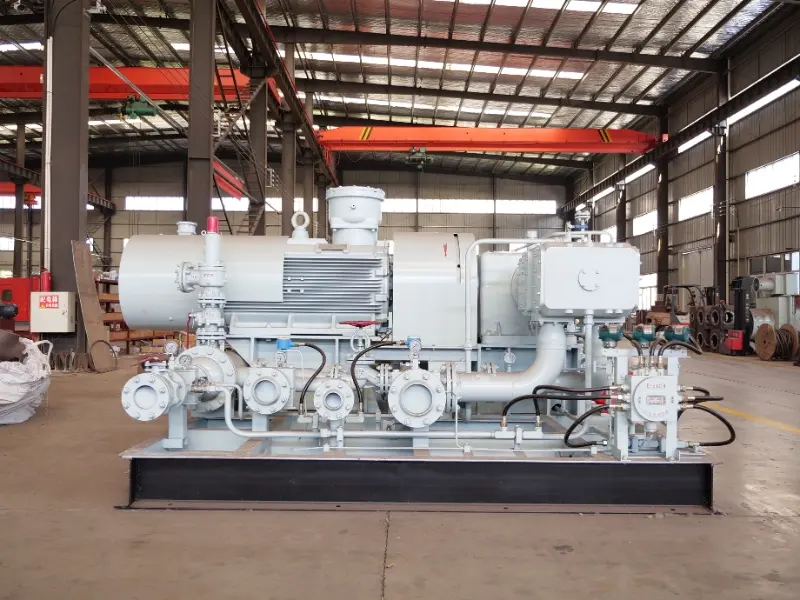
This ultimate guide will help you understand how reciprocating hydrogen compressors work, their key advantages, common applications, and how to select the right solution for your project.
What Is a Piston Hydrogen Compressor?
A piston hydrogen compressor, also known as a reciprocating hydrogen compressor, is a positive displacement compressor that uses a piston moving inside a cylinder to compress hydrogen gas to the desired pressure level.
Unlike centrifugal or rotary compressors, piston compressors are ideal for:
- High-pressure hydrogen compression
- Small to medium flow rates
- Precise pressure control
- Applications requiring stable and reliable output
They are widely used in 350 bar and 700 bar hydrogen systems.
Working Principle of Reciprocating Hydrogen Compressors
The compression process consists of four main stages:
- Suction Phase – Hydrogen gas enters the cylinder as the piston moves downward.
- Compression Phase – The piston moves upward, reducing volume and increasing pressure.
- Discharge Phase – Compressed hydrogen exits through the discharge valve.
- Cooling & Multi-Stage Compression – Intercoolers reduce temperature between stages to achieve higher final pressure.
For high-pressure hydrogen applications, multi-stage compression is typically required.
Key Advantages of Piston Hydrogen Compressors
✔ Capable of very high discharge pressures (up to 350 bar / 700 bar and beyond)
✔ Excellent compression efficiency
✔ Stable performance under fluctuating load
✔ Flexible customization options
✔ Suitable for hazardous hydrogen environments
Compared to diaphragm compressors, piston compressors offer higher flow capacity. Compared to centrifugal compressors, they are better suited for high-pressure hydrogen systems.
Main Applications of Hydrogen Piston Compressors
Hydrogen Refueling Stations (HRS)
Essential for compressing hydrogen into storage tanks for fuel cell vehicles.
Hydrogen Production Plants
Used in electrolysis hydrogen production and purification systems.
Industrial Hydrogen Compression
For chemical plants, metallurgy, and energy industries.
Hydrogen Storage & Transportation
High-pressure compression before cylinder filling or pipeline transmission.
Important Technical Parameters to Consider
When selecting a piston hydrogen compressor, evaluate:
- Required discharge pressure (e.g., 350 bar, 700 bar)
- Inlet pressure
- Flow rate (Nm³/h or m³/min)
- Hydrogen purity requirement
- Cooling method (air-cooled or water-cooled)
- Installation type (skid-mounted, stationary, containerized)
- Explosion-proof standards
Proper parameter matching ensures optimal performance and long service life.
Common Challenges in Hydrogen Compression
Hydrogen presents unique technical challenges:
- Hydrogen embrittlement
- Seal leakage
- High diffusivity
- Temperature control under high pressure
A well-designed piston hydrogen compressor addresses these issues through:
- Hydrogen-compatible materials
- Advanced sealing technology
- Multi-stage compression design
- Efficient cooling systems
How to Choose the Right Piston Hydrogen Compressor
Follow these steps:
Step 1 – Define Your Application
Fueling station, industrial use, hydrogen production, or storage?
Step 2 – Determine Pressure & Flow
High-pressure (350–700 bar) systems require multi-stage compressors.
Step 3 – Decide Oil-Free or Lubricated
For high-purity hydrogen, oil-free design is recommended.
Step 4 – Check Safety Certifications
Ensure compliance with industry and explosion-proof standards.
Step 5 – Choose an Experienced Manufacturer
Hydrogen compression requires specialized engineering expertise.
Why Choose a Professional Hydrogen Compressor Manufacturer?
A reliable manufacturer provides:
- Customized hydrogen compression solutions
- High-pressure design expertise
- Advanced sealing and cooling technology
- Strict quality control
- Long-term technical support
Professional engineering ensures safety, efficiency, and durability in hydrogen systems.
Frequently Asked Questions (FAQ)
What pressure can a piston hydrogen compressor reach?
Most high-pressure piston hydrogen compressors can reach 350 bar or 700 bar, depending on design.
Is an oil-free hydrogen compressor necessary?
For hydrogen refueling stations and fuel cell applications, oil-free compressors are strongly recommended to maintain gas purity.
What is the lifespan of a hydrogen piston compressor?
With proper maintenance, high-quality compressors can operate reliably for many years.
Are piston compressors safe for hydrogen?
Yes, when designed with hydrogen-compatible materials and explosion-proof standards.
Partner with Kehai for Reliable Hydrogen Compression
As hydrogen energy continues to grow globally, choosing the right compression partner is critical.
With advanced engineering, hydrogen-specific design expertise, and customized manufacturing capability, Kehai piston hydrogen compressors deliver the safety, efficiency, and durability required for modern hydrogen infrastructure.
Contact Kehai today to discuss your hydrogen compression project and receive a professional technical solution.ions.