


As global industries pivot toward Net-Zero 2050 goals, hydrogen H2 has emerged as the cornerstone of clean energy transition. However, the efficiency of the hydrogen economy relies on a single critical technology: Hydrogen Compressor.
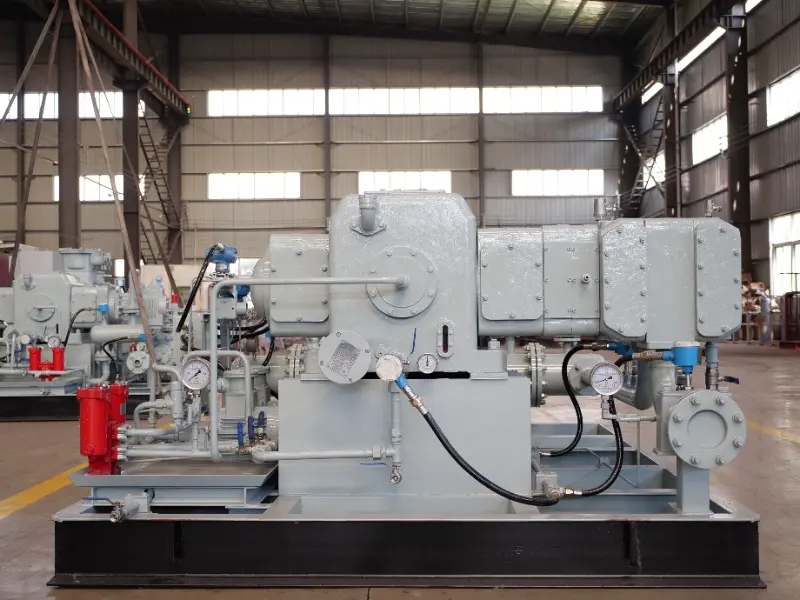
1. Why Hydrogen Compression is Essential for Net-Zero
Hydrogen is the most abundant element, but its low volumetric density at ambient pressure makes it difficult to store. To replace fossil fuels in heavy industries, hydrogen must be compressed to high pressures (typically 20MPa to 70MPa) to achieve the necessary energy density for:
- Green Steel Production: Using H2 as a reducing agent instead of carbon-heavy coke.
- Carbon-Neutral Chemicals: Providing feedstock for green ammonia and methanol.
- Heavy-Duty Mobility: Fueling long-haul trucks, ships, and trains via Fuel Cell technology.
2. Technical Challenges: Overcoming Hydrogen Embrittlement
Unlike air or natural gas, hydrogen molecules are extremely small and can penetrate metal lattices, a phenomenon known as hydrogen embrittlement.
Kehai’s Engineering Solutions:
To ensure operational safety and longevity, Kehai Hydrogen Compressors utilize specialized metallurgy and advanced composite seals. According to industry safety standards (such as ASME and ISO 19880), our equipment is designed to prevent leakage and material fatigue, ensuring a 20+ year service life in rigorous industrial environments.
3. The Advantage of Oil-Free Compression Technology
For many applications, especially Proton Exchange Membrane (PEM) Fuel Cells, gas purity is non-negotiable. Even trace amounts of oil can poison the fuel cell catalyst.
- Kehai’s 100% Oil-Free Design: Eliminates the risk of hydrocarbon contamination.
- Reduced Maintenance: Fewer filter changes and lower operational downtime compared to traditional lubricated models.
4. Key Applications Across the Hydrogen Value Chain
| Application | Pressure Requirements | Role of Compressor |
| Green Hydrogen Production | 2MPa – 5MPa | Initial boost for pipeline injection. |
| Tube Trailer Loading | 20MPa – 30MPa | Efficient long-distance transport. |
| Refueling Stations (HRS) | 35MPa – 70MPa | Rapid fueling for FCVs and heavy-duty fleets. |
5. Trends: High-Flow & High-Efficiency
The market is shifting toward large-scale hydrogen hubs. Kehai’s latest generation of compressors addresses this by offering:
- Smart Monitoring: Integrated IoT sensors for predictive maintenance and real-time efficiency tracking.
- Energy Recovery: Optimized heat exchange systems that repurpose thermal energy generated during compression.
Frequently Asked Questions (FAQ)
Why is oil-free compression critical for hydrogen applications?
Oil-free compression is essential to maintain gas purity, especially for fuel cell applications. Even trace oil can degrade the fuel cell stack.
What is the typical maintenance interval for an industrial hydrogen compressor?
While it varies by load, Kehai compressors typically require a minor inspection every 4,000 hours and a major overhaul every 8,000–12,000 hours, thanks to our wear-resistant sealing technology.
Can hydrogen compressors help in reducing the Levelized Cost of Hydrogen (LCOH)?
Yes. By utilizing high-efficiency motors and optimized compression stages, Kehai reduces energy consumption per kilogram of H2, directly lowering your operational expenses (OPEX).
Conclusion
The hydrogen compressor is no longer a peripheral component; it is the “heart” of the carbon-neutral industrial infrastructure. By selecting high-performance, oil-free compression technology, enterprises can significantly reduce their carbon footprint while ensuring operational safety.
About Kehai:
As a leader in high-pressure gas technology, Kehai provides world-class hydrogen compression solutions tailored for the global energy transition. Our systems are engineered for reliability, safety, and 100% gas purity.