


Choosing the right hydrogen compressor is critical for hydrogen refueling stations, fuel cell vehicles (FCEVs), and industrial hydrogen storage. Two main types dominate the market: diaphragm compressors and piston compressors. Understanding their differences will help you make the right choice for efficiency, safety, and cost.
Table of Contents
Diaphragm Hydrogen Compressors
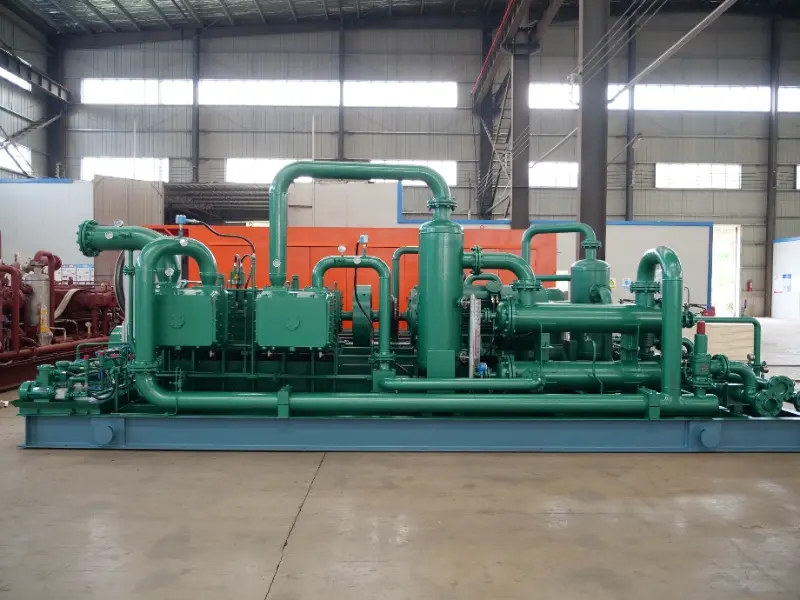
- High Purity: Hydrogen never contacts mechanical parts, ensuring contamination-free operation.
- High Pressure: Can handle pressures up to 100 MPa, ideal for storage and small refueling stations.
- Low Maintenance: Fewer moving parts and long service life.
- Safety: Minimal leakage risk, suitable for sensitive hydrogen systems.
Best For: High-purity hydrogen applications, research facilities, and high-pressure storage.
Piston Hydrogen Compressors
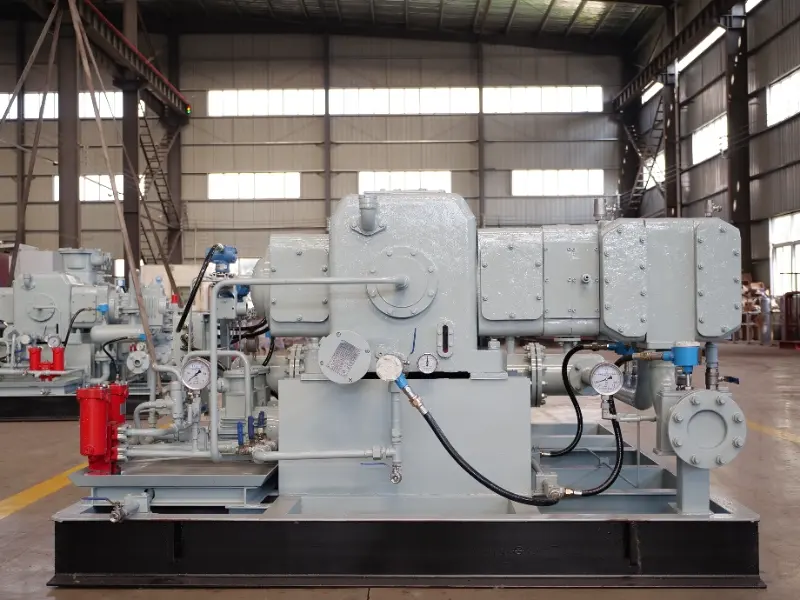
- Mature Design: Proven technology for industrial use.
- High Flow: Can handle medium to large hydrogen flows efficiently.
- Cost-Effective: Lower initial investment compared to diaphragm compressors.
- Maintenance Required: Seals and lubrication need regular checks.
Best For: Industrial hydrogen production, pipeline transport, and high-flow refueling stations.
Key Differences
| Feature | Diaphragm Compressor | Piston Compressor |
| Hydrogen Contact | Separated from mechanical parts, no contamination | Direct contact with piston, requires lubrication |
| Pressure Range | Up to 100 MPa, suitable for high-pressure storage | Typically 40–80 MPa, flexible for industrial use |
| Maintenance | Low maintenance, long service life | More frequent maintenance, seals and oil need replacement |
| Safety | Low leakage risk, high safety | Requires strict leak and temperature management |
| Flow Range | Small to medium flows, precise applications | Medium to large flows, industrial applications |
| Cost | Higher initial investment | Lower initial cost, higher long-term maintenance |
How to Choose?
- Choose diaphragm compressors if you need high-purity hydrogen, high pressure, and low maintenance.
- Choose piston compressors if you need large flow, industrial use, and lower upfront costs.
Many suppliers offer customized solutions to combine the benefits of both types, ensuring optimal performance for your hydrogen system.
FAQ
Q1: What is the main difference between diaphragm and piston hydrogen compressors?
A1: Diaphragm compressors isolate hydrogen from mechanical parts, providing high purity and low leakage. Piston compressors handle larger flows but require regular maintenance.
Q2: Which hydrogen compressor is safer?
A2: Diaphragm compressors have lower leakage risk, making them safer for high-pressure and high-purity hydrogen systems.
Q3: Can I use a piston compressor for fuel cell applications?
A3: Yes, but diaphragm compressors are preferred for high-purity hydrogen used in fuel cells.
Q4: How often should a hydrogen compressor be maintained?
A4: Maintenance frequency depends on the type and application. Diaphragm compressors require less frequent maintenance, while piston compressors need regular checks for seals and lubrication.
Q5: Do you provide custom hydrogen compressor solutions?
A5: Yes, we offer tailored solutions to meet specific pressure, flow, and purity requirements for your project.