


مع استمرار توسع صناعة طاقة الهيدروجين لتشمل خلايا الوقود، ومحطات التزود بالهيدروجين، والمعالجة الكيميائية، وإنتاج الهيدروجين الأخضر، يتزايد الطلب بسرعة على حلول ضغط الهيدروجين الآمنة والخالية من الزيوت وعالية النقاء. ومن بين تقنيات ضغط الهيدروجين المختلفة، ... ضاغط هيدروجين غشائي يبرز كواحد من أكثر الخيارات موثوقية وخالية من التلوث لتطبيقات الهيدروجين عالية الضغط.
تشرح هذه المقالة ماهية ضاغط الهيدروجين ذو الغشاء، وكيفية عمله، ومزاياه، وتطبيقاته الرئيسية، وكيفية اختيار النموذج المناسب لنظام الهيدروجين الخاص بك.
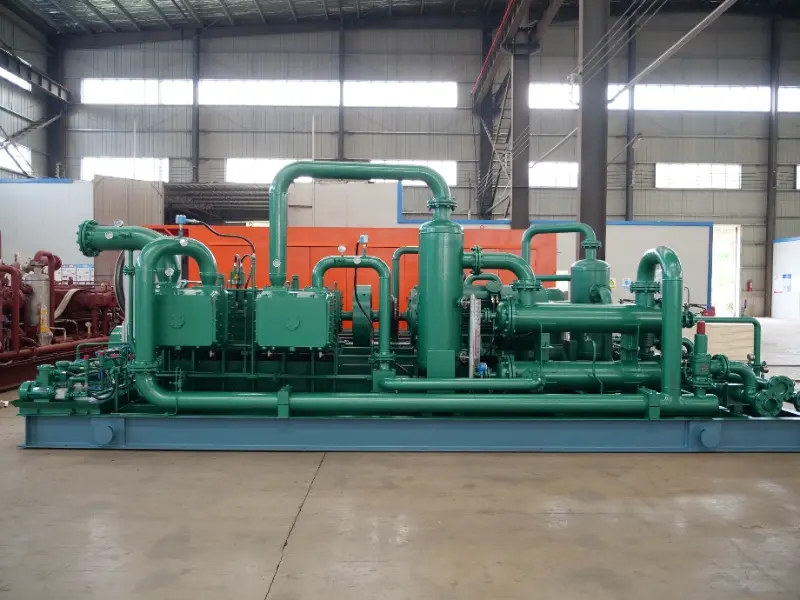
ما هو ضاغط الهيدروجين ذو الغشاء؟
A ضاغط هيدروجين غشائي هو نوع من ضواغط الإزاحة الموجبة التي تستخدم غشاءً معدنيًا مرنًا لضغط غاز الهيدروجين بدلاً من المكابس التقليدية أو الأسطوانات المُشحَّمة بالزيت. حجرة الغاز معزولة تمامًا عن نظام القيادة الهيدروليكي، مما يضمن خالٍ تماماً من التلوث النفطي ونقاء غازي عالٍ للغاية.
هذا التصميم يجعل ضواغط الحجاب الحاجز مثالية للتطبيقات التي تتطلب ضغط الهيدروجين عالي الضغط, تشغيل خالٍ من التسريب, ، و أقصى درجات الأمان, ، مثل محطات إعادة تزويد الهيدروجين بالوقود، وأنظمة التحليل الكهربائي، والبحوث المختبرية، وأنظمة تخزين الهيدروجين.
كيف يعمل ضاغط الهيدروجين ذو الغشاء؟
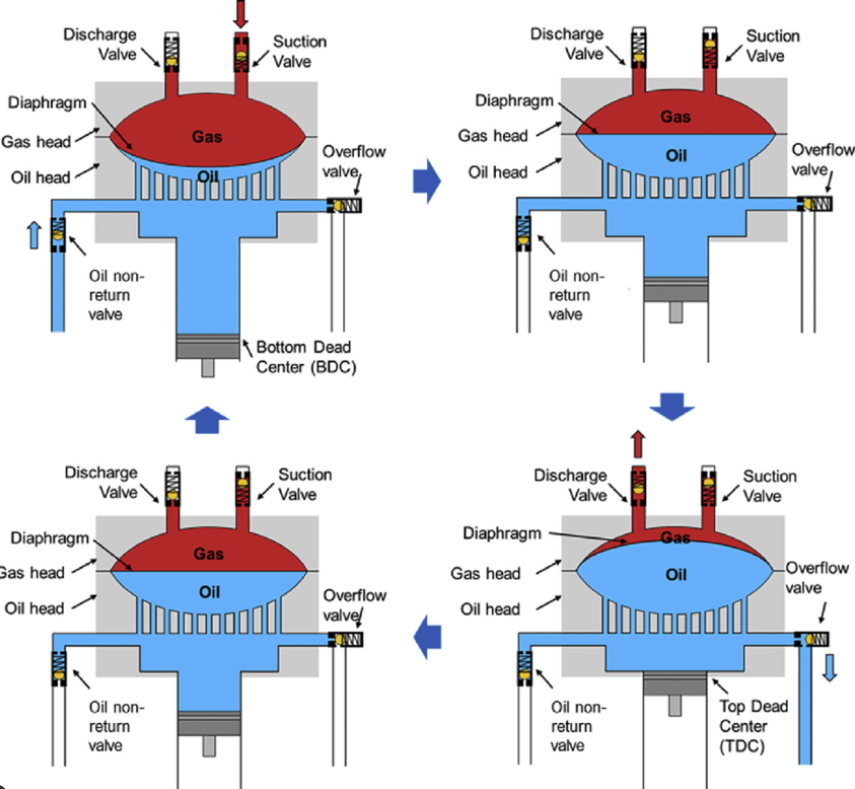
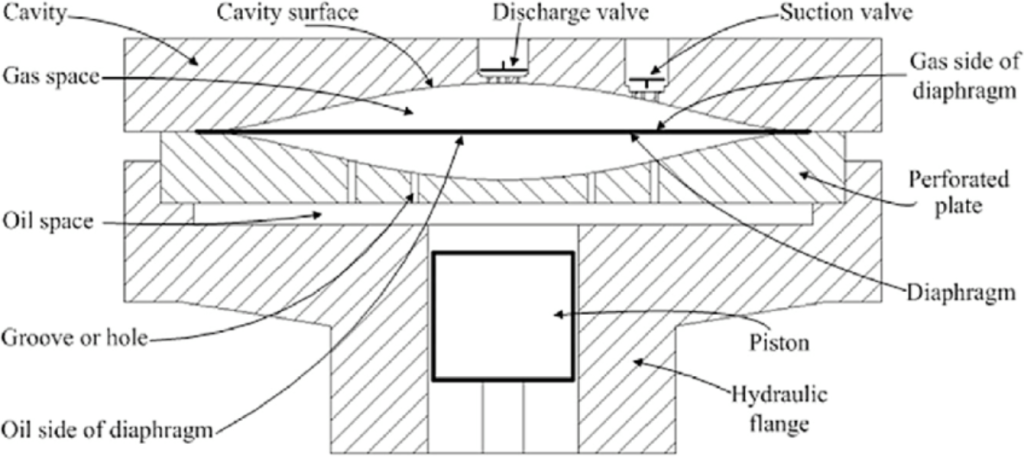
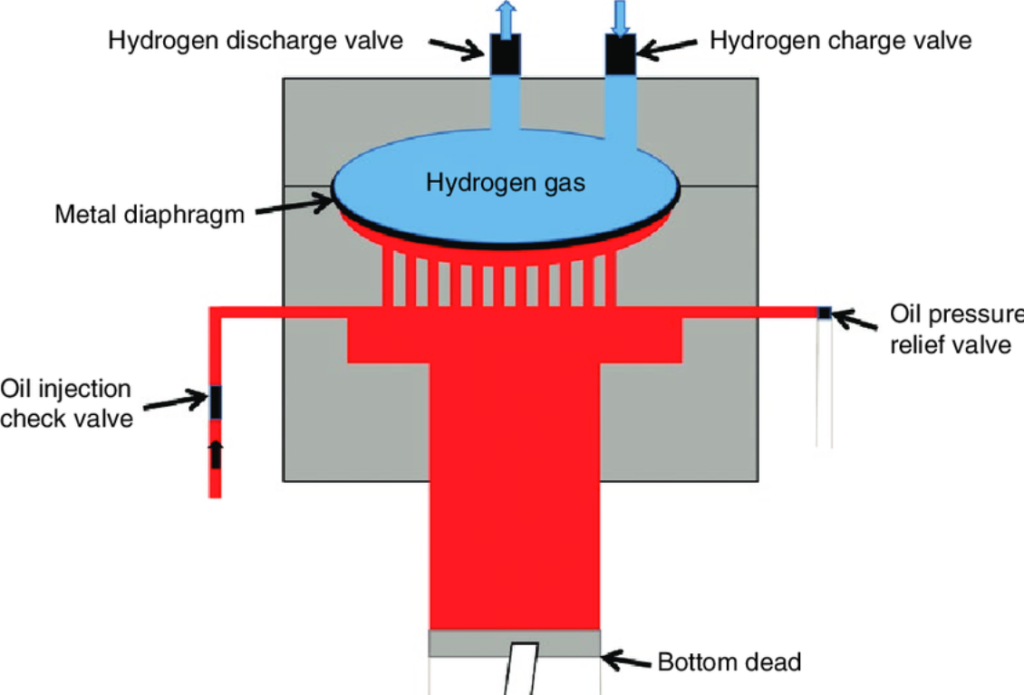
يعمل ضاغط الهيدروجين ذو الغشاء باستخدام غشاء يعمل بنظام هيدروليكي تتحرك هذه الأداة ذهابًا وإيابًا لضغط غاز الهيدروجين في حجرة مغلقة. وتتبع العملية عادةً الخطوات التالية:
- مدخل الغاز
يدخل الهيدروجين إلى حجرة الضغط من خلال صمام المدخل أثناء شوط السحب. - مرحلة الضغط
يدفع الزيت الهيدروليكي الحجاب الحاجز إلى الأمام، مما يقلل من حجم الحجرة ويزيد من ضغط الغاز. - مرحلة التفريغ
بمجرد الوصول إلى الضغط المستهدف، يخرج الهيدروجين من خلال صمام التفريغ إلى أسطوانات التخزين أو خطوط الأنابيب أو الخزانات في اتجاه مجرى النهر. - تكرار الدورة
يعود الحجاب الحاجز إلى وضعه الأصلي، مما يسمح ببدء دورة الضغط التالية.
لأن غاز الهيدروجين لا يلامس الزيت أو موانع التسرب أو الأجزاء الميكانيكية المتحركة، فإن ضواغط الحجاب الحاجز توفر أداءً فائقًا مراقبة النقاء, منع التسرب, ، و السلامة التشغيلية.
المزايا الرئيسية لضواغط الهيدروجين الغشائية
1. خالٍ من الزيوت وعالي النقاء
تمنع حجرة الغشاء المغلقة دخول بخار الزيت والرطوبة وتلوث الجسيمات، مما يجعل هذه الضواغط مثالية لـ هيدروجين من الدرجة المستخدمة في خلايا الوقود والاستخدام المختبري.
2. إحكام ممتاز ضد التسرب وأمان فائق
توفر ضواغط الحجاب الحاجز معدلات تسرب شبه معدومة، وهو أمر بالغ الأهمية عند التعامل مع غاز الهيدروجين القابل للاشتعال وتلبية معايير السلامة الصارمة.
3. قدرة تحمل الضغط العالي
تحقق ضواغط الهيدروجين الحديثة ذات الغشاء ضغوط تفريغ تصل إلى 350 بار، 700 بار، وما فوق, ، مناسبة لمحطات إعادة تزويد الهيدروجين بالوقود وأنظمة التخزين ذات الضغط العالي.
4. عمر خدمة طويل وصيانة منخفضة
تم تصميم الأغشية المعدنية لتتحمل ملايين الدورات، ولأن مكونات جانب الغاز تتعرض لتآكل ضئيل، فإن فترات الصيانة أطول من العديد من ضواغط المكابس.
5. أداء مستقر عند معدلات تدفق صغيرة إلى متوسطة
فهي توفر تحكمًا دقيقًا في الضغط وتدفقًا مستقرًا، مما يجعلها مثالية لأنظمة الهيدروجين التي تعمل بشكل مستمر.
التطبيقات النموذجية لضواغط الهيدروجين الغشائية
تُستخدم ضواغط الهيدروجين ذات الغشاء على نطاق واسع في:
- محطات إعادة تزويد الهيدروجين بالوقود (HRS) لأنظمة تزويد الوقود لمركبات خلايا الوقود
- منافذ جهاز التحليل الكهربائي في محطات إنتاج الهيدروجين الأخضر
- مختبرات واختبارات خلايا الوقود يتطلب ذلك هيدروجين فائق النقاء
- أنظمة تخزين الهيدروجين, ، بما في ذلك تعبئة الأسطوانات ومقطورات الأنابيب
- المعالجة الكيميائية وتصنيع أشباه الموصلات
تستفيد هذه التطبيقات من تصميم الضاغط الخالي من الزيت، وأداء الختم المحكم، والتشغيل الموثوق به تحت ضغط عالٍ.
ضواغط الهيدروجين الغشائية مقابل ضواغط الهيدروجين المكبسية
| ميزة | ضاغط هيدروجين غشائي | ضاغط هيدروجين مكبسي |
|---|---|---|
| نقاء الغاز | فائق الجودة (خالي من الزيوت) | خطر انتقال النفط |
| معدل التسرب | منخفض للغاية | معتدل |
| أمان | مرتفع جداً | معيار |
| القدرة على الضغط | مرتفع جداً (يصل إلى 700 بار فأكثر) | متوسط إلى مرتفع |
| صيانة | قليل | أعلى |
| الأفضل لـ | هيدروجين عالي النقاء وعالي الضغط | غاز صناعي ذو تدفق كبير |
للتطبيقات التي تتطلب نقاء عالٍ للهيدروجين، وأمان، وأداء خالٍ من التسرب, بشكل عام، تعتبر ضواغط الحجاب الحاجز هي الحل المفضل.
كيفية اختيار ضاغط الهيدروجين ذي الغشاء المناسب
عند اختيار ضاغط الهيدروجين ذي الغشاء، ضع في اعتبارك المعايير التالية:
- نطاق ضغط المدخل والمخرج (على سبيل المثال، من 30 بار إلى 350 بار أو 700 بار)
- متطلبات معدل التدفق (متر مكعب/ساعة أو كيلوغرام/ساعة)
- مواصفات نقاء الهيدروجين
- دورة العمل وساعات التشغيل
- طريقة التبريد (التبريد بالهواء أو التبريد بالماء)
- معايير الامتثال (ISO، CE، ASME، ATEX، إلخ).
يضمن العمل مع شركة تصنيع ذات خبرة تحديد الحجم المناسب، وتكامل النظام، والموثوقية التشغيلية على المدى الطويل.
لماذا تختار ضواغط الهيدروجين ذات الغشاء لدينا؟
في كيهاي, نحن متخصصون في ضواغط الهيدروجين الغشائية المصممة حسب الطلب لمحطات تزويد الهيدروجين بالوقود، وأنظمة التحليل الكهربائي، والمختبرات، وتخزين الهيدروجين الصناعي. تتميز ضواغطنا بما يلي:
- غرف ضغط خالية من الزيت والملوثات
- تصاميم عالية الضغط تصل إلى 700 بار وما فوق
- أغشية معدنية متعددة الطبقات متينة لعمر خدمة ممتد
- اهتزاز منخفض، تشغيل هادئ، وكفاءة عالية في استهلاك الطاقة
- الامتثال الكامل لمعايير السلامة الدولية للهيدروجين
سواء كنت بحاجة إلى ضاغط هيدروجين صغير الحجم للمختبر أو نظام ضغط هيدروجين صناعي شديد التحمل، فإن فريقنا الهندسي قادر على تقديم حلول موثوقة وآمنة وفعالة من حيث التكلفة مصممة خصيصًا لمشروعك.
تواصل معنا اليوم للحصول على حلول ضاغط الهيدروجين الغشائي المُخصصة لتطبيق الهيدروجين الخاص بك.