


As hydrogen fuel cell vehicles (FCEVs) and hydrogen infrastructure continue to expand globally, hydrogen refueling stations require compression equipment that delivers high pressure, high flow, long-term reliability, and cost efficiency. Among all available technologies, piston hydrogen compressors have become the most widely adopted solution for refueling stations due to their proven performance and strong engineering adaptability.
This article explains why piston hydrogen compressors are the preferred choice for hydrogen fueling applications and how they help operators achieve safe, stable, and efficient hydrogen supply.
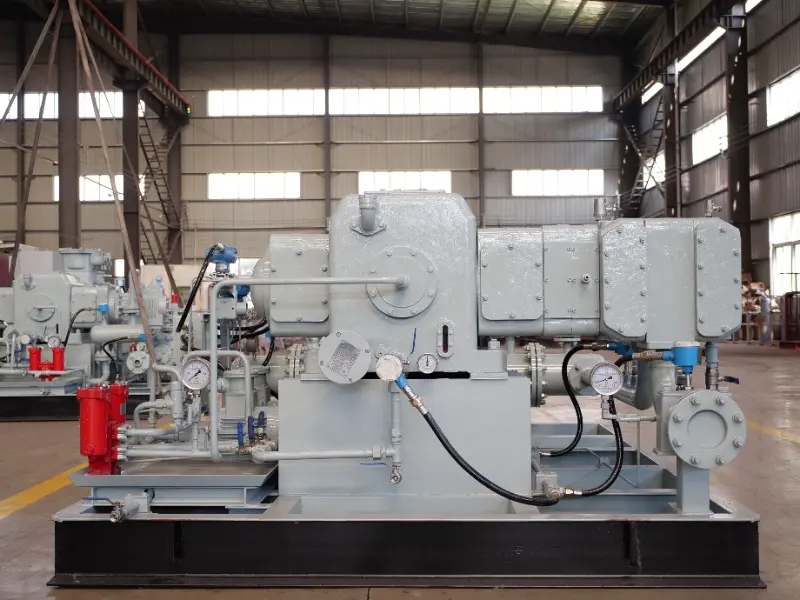
1. High-Pressure Capability for 35 MPa and 70 MPa Refueling
Hydrogen refueling stations typically require compression to 35 MPa or 70 MPa, and in some applications even higher. Piston hydrogen compressors use multi-stage reciprocating compression technology, enabling:
- Stable ultra-high pressure output
- Continuous-duty operation
- Wide inlet pressure adaptability
This makes them ideal for meeting the demanding pressure requirements of commercial hydrogen fueling stations.
2. High Flow Capacity for Fast Hydrogen Dispensing
Compared with diaphragm compressors, piston hydrogen compressors are better suited for medium to large flow applications, such as:
- Public hydrogen refueling stations
- Bus and truck hydrogen fueling depots
- High-throughput commercial stations
Their high volumetric efficiency allows fewer machines to handle larger hydrogen demand, simplifying system design and reducing infrastructure costs.
3. Proven Reliability for Continuous Industrial Operation
Piston compressor technology has been used for decades in industrial gas and hydrogen applications. This mature design delivers:
- Long service life
- Stable performance under continuous load
- Easy operation and maintenance
For hydrogen refueling stations operating 24/7, this reliability is essential to ensure uninterrupted hydrogen supply.
4. Lower Total Cost of Ownership
From both capital investment and long-term operating perspectives, piston hydrogen compressors offer strong cost advantages:
- Lower initial equipment cost compared to diaphragm compressors
- Readily available spare parts
- Simple maintenance and servicing
This results in a lower total cost of ownership (TCO), making piston compressors a cost-effective solution for hydrogen fueling projects.
5. Oil-Free Design for Fuel Cell-Grade Hydrogen Purity
Modern oil-free piston hydrogen compressors use advanced sealing materials and dry-running components to eliminate oil contamination risks, ensuring:
- High hydrogen purity
- Compliance with fuel cell standards
- Reliable operation in sensitive applications
This allows piston compressors to safely serve hydrogen fueling infrastructure without compromising gas quality.
6. Modular Design for Easy System Integration
Piston hydrogen compressors can be easily integrated into complete hydrogen refueling station systems, including:
- High-pressure storage cylinders
- Cooling and purification systems
- Dispensers and control units
Their modular design supports both small demonstration stations and large commercial fueling stations with scalable capacity.
7. Strong Engineering Compatibility and Customization
Piston hydrogen compressors can be customized based on:
- Required pressure levels
- Flow rates
- Site layout and footprint
- Duty cycles
This flexibility allows hydrogen station developers and EPC contractors to optimize system performance for specific project requirements.
Conclusion
Piston hydrogen compressors have become the industry standard for hydrogen refueling stations because they deliver:
✔ Stable high-pressure output
✔ High flow rates for fast fueling
✔ Proven reliability and long service life
✔ Lower total ownership cost
✔ Oil-free hydrogen compression capability
✔ Easy integration into fueling systems
For commercial hydrogen fueling infrastructure, piston hydrogen compressors provide the most balanced solution in performance, cost, and scalability.
FAQ
Q1: Are piston hydrogen compressors suitable for 70 MPa hydrogen refueling stations?
Yes. Multi-stage piston hydrogen compressors are widely used in 70 MPa hydrogen fueling systems and deliver stable high-pressure hydrogen output.
Q2: Can piston hydrogen compressors operate oil-free?
Yes. Modern oil-free piston compressors use dry-running components to provide fuel cell-grade hydrogen purity.
Q3: Are piston compressors better than diaphragm compressors for refueling stations?
For high-flow, commercial refueling stations, piston compressors are often preferred due to their cost efficiency and large capacity, while diaphragm compressors are better for ultra-high purity and low-flow applications.